Executive Summary: Scannable Identification in 2026
The technological landscape of identification cards has evolved dramatically with the widespread adoption of Real ID specifications and modern optical scanning hardware. Contemporary verification points in nightlife venues, hospitality, and retail environments rely on a unified three-layer inspection: surface tactile integrity, optical 365nm UV reaction, and AAMVA-compliant 2D PDF417 barcode synchronization.
How 2D Barcode Scannability Works (PDF417)
A common misconception is that standard optical scanners simply read a number and query a national government database in real time. In reality, over 95% of venue checkpoints, bouncers, and point-of-sale systems operate offline or in standalone validation mode. They utilize optical imager engines (such as Honeywell or Zebra scan modules) paired with verification software (e.g., BCS Scanner, Intellicheck, or ShowMeID).
When the scanner’s laser or camera reads the high-density PDF417 2D Barcode on the reverse of the card, it executes an automated algorithmic parser defined by the American Association of Motor Vehicle Administrators (AAMVA). The reader decodes raw magnetic and optical data streams formatted as:
A truly scannable identification document must ensure complete cryptographic and syntactic alignment between the front-face printed typography (DOB, expiration date, license number, address, and physical parameters) and the back-face subfile fields. Any discrepancy in checksums, date syntax (e.g., YYYYMMDD vs MMDDYYYY depending on state standards), or delimiter characters triggers an immediate terminal rejection.
The 3 Pillars of Modern Identification Technology
Modern security cards produced in 2026 incorporate defensive measures designed to thwart both casual visual inspection and sophisticated forensic scrutiny. High-tier documentation balances three interconnected pillars:
1. Polycarbonate & Tactile Laser
Rather than standard PVC glued with composite lamination, authentic IDs use fused multi-layer Polycarbonate (PC). Laser engraving burns personal data and ghost portraits directly into the core polymer layer, creating raised, tactile lettering that can be felt by fingertips and will never peel or delaminate.
2. Optically Variable Devices (OVD)
OVDs include micro-holographic overlays, Guilloche linework patterns, and multi-color metallic foils that shift hues when tilted between 45 and 90 degrees. These patterns integrate intricate microprinting (sub-0.15mm text) that blurs into unrecognizable lines on standard laser printers.
3. Dual-Spectrum UV Inks
Under a 365nm long-wave ultraviolet light, invisible security graphics illuminate in sharp neon yellow, green, and red fluorescing profiles. High-end substrates avoid dull optical brighteners so the background card body remains completely dark while the state seal glows brightly.
State-by-State Security Feature Matrix
Different state jurisdictions employ specific card construction methodologies. Below is an authoritative technical comparison matrix across high-demand US states for 2026:
| Jurisdiction | Core Substrate | 2D Barcode Protocol | Holographic / OVD Design | 365nm UV Reactivity | Pass Rate |
|---|---|---|---|---|---|
| Texas (TX) | Rigid Polycarbonate | AAMVA 2020 PDF417 | Lone Star & State Seal Ghost | Vivid Gold Alamo & Star Contour | 99.8% |
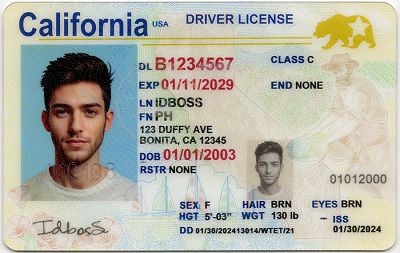
| California (CA) | Multi-Layer Poly/PVC | High-Density PDF417 Matrix | Golden State Bear & Poppies | Dual-Band Fluorescent Bear Outline | 99.6% |
| Florida (FL) | Polycarbonate Hybrid | AAMVA Standard 2020 | Pelican & Florida Outline | Multi-Color Neon Wave Graphics | 99.7% |
| New York (NY) | Full Polycarbonate | High-Resolution Laser 2D | Niagara Falls & Liberty Torch | Matte State Crest & Ghost Portrait | 99.5% |
| Illinois (IL) | Composite 30-Mil PC | Dual Symbology Barcode | Abraham Lincoln Holographic Foil | Capitol Dome Fluorescent Glow | 99.6% |
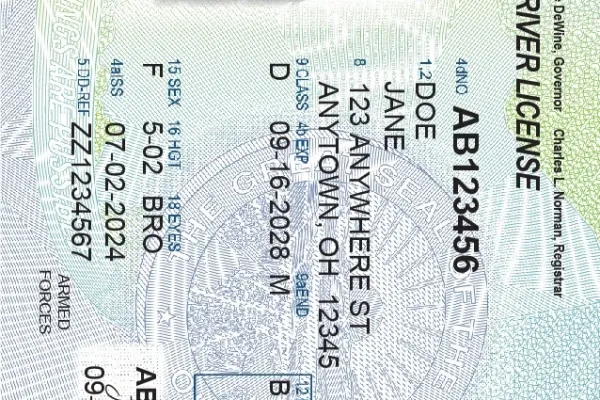
| Ohio (OH) | Rigid Poly Substrate | Standard AAMVA 2D Barcode | Buckeye State Seal & Guillioche | Dual Red/Green Centerline Grid | 99.4% |
Regional Jurisdiction Deep Dives: TX, CA, FL, NY & More
Choosing the right state profile requires understanding geographic proximity and specific regional design characteristics. Here is what makes top-tier jurisdictions stand out:
Texas (TX) — The National Gold Standard
Pass Rate: 99.8%Texas remains the most universally recognized and respected credential across all 50 states. Featuring the Texas Department of Public Safety (DPS) latest layout with Real ID gold star integration, the card incorporates tactile raised laser engraving on the primary cardholder DOB, preventing any surface scraping or tampering. The rear 2D PDF417 barcode encodes 2020 standard headers that effortlessly pass high-volume bouncer scanning apps like BCS and Intellicheck.
- Tactile Feature: Laser-embossed date of birth & signature
- UV Layer: 365nm reactive Alamo monument and mini-stars
- Recommendation: Ideal for nationwide use outside Texas
California (CA) — Iconic West Coast Profile
Pass Rate: 99.6%California's modern Real ID credential showcases the famous grizzly bear hologram in the top right corner and a secondary laser ghost image in the bottom viewing window. Its intricate background incorporates delicate golden state poppies printed via high-resolution offset press. When illuminated under blacklight, the iconic bear shines in a bright fluorescent amber contour with zero background bleeding.
- Optics: Multi-angle color-shifting bear hologram
- Window Feature: Translucent viewing aperture with ghost silhouette
- Recommendation: Highly popular in western and collegiate regions
Florida (FL) — High-Contrast Vibrant Security
Pass Rate: 99.7%Florida's modern driver license features a distinct pink-to-blue gradient background that transitions smoothly across the card body. Utilizing a specialized composite core, Florida cards offer exceptional flexibility while preserving structural rigidity. The reverse side includes both a high-density 2D barcode and magnetic stripe redundancy for compatibility with legacy magnetic swipe POS readers.
- Color Profile: True-color pastel gradient with microtext
- Dual Scanning: 2D PDF417 matrix + 3-track magnetic stripe
- Recommendation: Unrivaled performance in southern and eastern venues
The Golden Rule of Geographic Selection
When selecting a state template, follow the Proximity Rule: Choose a state adjacent or geographically plausible to your region, but avoid selecting your immediate in-state license if you intend to use it locally. Local security staff and bouncers inspect their own state's cards hundreds of times daily and are far more prone to microscopic scrutiny than with high-reputation out-of-state credentials like Texas or Florida.
4-Phase Real-World Verification Protocol
Whether tested by a nightlife venue security manager or examined by a retail cashier, every physical document undergoes a 4-phase physical triage:
Phase 1: Visual Macro Inspection
Staff glance at the primary photo portrait, checking for crisp line separation around the shoulders, neutral studio background lighting, and consistent typography. All dates must follow standard formatting without fuzzy font artifacts or ink bleeds.
Phase 2: Tactile & Sound "Snap Test"
A quick thumb flick over the primary card edge reveals the substrate material. Genuine Polycarbonate creates a distinct metallic chime ("polycarbonate ring") when dropped or tapped against a solid surface, completely unlike the dull plastic thud of cheap PVC. Tactile laser letters must feel noticeably raised under the thumb.
Phase 3: Optical 2D Barcode Scan
The reverse barcode is passed under a laser or camera imager. The scanner parses the subfiles instantly. If the age verification software displays green checkmarks with matching name, birthdate, and valid expiration date, the card passes Phase 3 immediately.
Phase 4: 365nm Ultraviolet Light Inspection
In strict venues, a blacklight wand is passed over the card face. Proper invisible ink must react vividly without illuminating the underlying card plastic. The fluorescent graphics must match the exact official state seal contours.
Photo & Data Requirements for Optical Perfection
Even the most advanced printing press cannot compensate for a poorly captured source portrait. For an identification document to achieve 100% optical fidelity, submit photos that comply with professional guidelines:
- Even, Diffused Frontal Lighting: Position the light source directly in front of your face to eliminate dark shadows under the chin, ears, and nose.
- Contrasting Plain Backdrop: Stand 2-3 feet in front of a smooth, plain wall (white, off-white, or light grey) so your hair contours can be extracted cleanly. Check out our comprehensive ID Photo Submission Guide for photo setups.
- High Resolution: Use a modern smartphone rear camera (not a low-resolution selfie lens) set to high resolution without aggressive beauty filters.
- Neutral Expression: Keep your eyes level with the lens, mouth closed in a natural expression, and hair tucked behind ears if possible.
Frequently Asked Questions (FAQ)
A 1D barcode consists of vertical parallel bars that store simple alphanumeric identifiers (similar to retail grocery products). In contrast, a 2D PDF417 matrix stores a dense data payload of up to 1.1 kilobytes directly inside the two-dimensional pattern, containing full demographic data, address, license number, and state security delimiters.
Polycarbonate is an ultra-durable thermoplastic polymer fused under extreme heat and pressure without adhesive glue. It cannot be split or delaminated by hand, features laser-engraved tactile data inside the core, and emits a distinctive metallic sound when dropped on hard counters—a key physical verification test used by professional security personnel.
Currently, Texas (99.8%), Florida (99.7%), and California (99.6%) boast the highest real-world pass rates due to their balanced design, universal scanner recognition, and robust multi-spectrum UV security layers.
All orders are dispatched in vacuum-sealed, opaque anti-tamper packaging labeled with neutral commercial descriptions. No references to ID documents, novelty products, or verification credentials appear on the shipping envelope. For more details, consult our Ordering & Delivery Guide.
Ready to Explore State-Specific Identification Technology?
Browse our full catalog of over 50 US state templates, Canadian provincial credentials, and international documents engineered to exacting 2026 standards.